
¿Qué haces cuando debes escribir un texto largo, pero no tienes ganas de hacerlo?
Efectivamente, actualizar la gran lista de blogs sobre la productividad personal.
Wow! This is going to cost me a lot of time to study: Index of productivity patterns
📷 Staircase

Decision fatigue only affects people who believe that willpower runs out quickly
Psychologist Carol Dweck has discovered that how we think about willpower affects how tired we feel after making decisions. People who believe their willpower is quickly depleted often feel exhausted after a difficult task. However, those who believe that willpower is not quickly depleted are less affected and may even perform better after a challenge.
This idea is related to Dweck’s theory of the “fixed mindset” and the “growth mindset.” People with a fixed mindset believe that their abilities and resources, such as willpower, are fixed and limited. This can cause them to become tired more quickly and give up more easily when faced with problems. People with a growth mindset believe they can grow and that their willpower can be replenished, allowing them to better handle difficult situations.
To believe that willpower is not limited, you can start by challenging this thought. This can be done by achieving small successes in situations where you would normally give up, and using these successes as evidence that your willpower is stronger than you thought. It is important to realize that the moment just before giving up is often the hardest, but pushing through can lead to a change in your way of thinking and a stronger belief in your own resilience.
Related:
Keep essential information in your mind so you can access it quickly without having to look it up
It is important to keep essential knowledge at hand so you can use it immediately when needed. This means training your brain to recognize and remember important information, allowing you to respond faster and better in different situations. This process helps you become less dependent on external tools because you already know a lot yourself.
An important part of this is actively engaging with information. This means not just reading or hearing information, but also working with it by discussing it, trying it out, and applying it in different situations. This helps you remember the information better. It is an ongoing process of learning and repetition, training your brain to recognize patterns and automatically come up with solutions. This way, you can act quickly without first having to search for information.
While digital tools can be handy, it is important to first make the most of your own brain. This means investing time and effort in truly understanding the information you encounter. By filling your brain with knowledge and actively using it, you build a strong foundation that allows you to respond quickly and effectively to new challenges and situations.
Related:
- Any personal effectiveness system that helps to get tasks out of your mind is Getting Things Done
- A Zettelkasten is an intelligent conversation with my past thoughts
- Reserve quality time for reading; only with full attention can you make the shift from ‘reading for information’ to ‘reading for knowledge’
- Rephrasing a text helps me to better understand what the author means
- Working slower promotes deeper thinking processes and better results
With al this attention for creating an external brain (David Allen) and building a second brain (Tiago Forte), we might forget this:
But it’s also important to practice holding things in mind. That’s how we exercise the brain, folding ideas into our intrinsic memory and rebuilding them when they go awry.
Tengo una cosa claro: cuando no terminas tus tareas dentro del plazo, el tiempo no tiene la culpa.
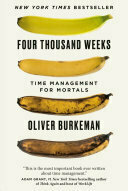
Finished reading: Four Thousand Weeks by Oliver Burkeman 📚
Though i finished reading this book, I will be thinking and reflecting on its contents for many more weeks.
I don’t like having too many meetings, because I am the kind of person who leaves a one hour meeting with four more hours of work to do.
Nir argues that Time blocking can be useful for everybody, as long as you use it for Reflective Work (and not for Reactive Work), start small (maybe with a 15 minute block) and try to use it also for fun activities.
When you timebox fun, you’ll see what true leisure feels like, unencumbered by the nagging feeling that you should be doing something else.