
What we believe in:
Attention doesn’t scale, no matter how hard we try.
What we believe in:
Attention doesn’t scale, no matter how hard we try.
What do I want Tana to be for me? The truth is, Tana can be anything you need it to be.
For me, Tana started as a simple notepad where I jotted down quick notes during my workday. Then, I began adding links and my thoughts on them, turning Tana into my personal knowledge hub. Next, I created projects and tags, and Tana became a versatile to-do list app. Now, Tana is also my research assistant, my brainstorming partner, my podcast script writer, and my contact manager.
Tana can be anything you want it to be. What do you want Tana to be for you?
On MacOS, you can easily hide files or folders by using the command line. This can be useful if you want to keep certain files out of sight without deleting them.
To do this, first open a terminal window. You can do this by pressing Command+Space, typing “Terminal,” and pressing Enter. In the terminal window that appears, use the command chflags hidden <file path>, replacing <file path> with the path to the file or folder you want to hide. This command marks the file or folder as hidden, making it no longer visible in Finder.
If you later decide that you want to make the file or folder visible again, you can use the same command with nohidden instead of hidden. This will make the file or folder visible again in Finder.

Currently reading: I am tao by Arjan Broere 📚
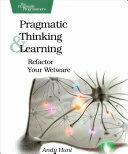
Finished reading: Pragmatic Thinking and Learning by Andy Hunt 📚
Do you know exactly what your job entails?
If you’re serious about the project, it’s time to give yourself a promotion, and to hire yourself to do work that’s yours and yours alone to contribute. It’s almost certain that there’s someone cheaper, faster and yes, better at the other work than you are.
Today is my lucky day!
Wordle 1.290 1/6
🟩🟩🟩🟩🟩
There has been much discussion about how blue light from screens affects our sleep, but new research shows that the impact may be smaller than we thought. Sleep experts have found that blue light causes you to fall asleep on average less than three minutes later. This means that the idea that blue light significantly disrupts your sleep is largely incorrect. Although using technology just before bedtime is sometimes linked to poorer sleep, there are other factors that have more influence, such as what you watch and notifications that can wake you up.
People often use technology to keep themselves occupied or to feel better, which can also affect their sleep habits. It is important to know that it is not so much the blue light that affects your sleep, but more how and why you use technology. Through self-control and help from others, you can use technology wisely before bedtime so that it does not negatively affect your sleep.
Make your own end of year lists. Choose your own important memories. Pick the songs you loved and share it with the world. You don’t need an algorithm.
Yes, yes, yes!
As a productivity expert, I’m always on the lookout for tools that can adapt to my ever-evolving workflow. This week, I decided to experiment with Tana, a system that has become my go-to for task and project management. What I love about Tana is its flexibility—it can be molded to fit any workflow, making it an indispensable tool in my productivity arsenal.
Until recently, I organized my tasks using a Kanban system within Tana, categorizing them into three horizons: today’s tasks, this week’s tasks, and future tasks. This method worked well, but as someone who constantly seeks improvement, I wanted to try something new. Enter time-blocking—a technique I had previously used with another tool, SkedPal. Now, with Tana’s comprehensive capabilities, I no longer need multiple tools. Everything I need is right here.
The transition to time-blocking was surprisingly simple. I added a due date field to my task super tag and included a calendar in the sidebar of my daily notes page. This let me drag tasks directly into the calendar, effectively time-blocking them. I also made a few tweaks, like adding the meeting tag to the calendar to see my appointments alongside tasks. For convenience, I created command buttons to quickly schedule tasks for the day. These enhancements, while minor, showcase Tana’s adaptability.
My primary goal with this experiment is to become more realistic about my commitments. I have a tendency to overcommit, and by blocking tasks on my calendar, I can better understand how long tasks take and how limited my time truly is. This awareness is crucial for prioritizing effectively and ensuring that I focus on what truly matters.
This week-long experiment is a testament to Tana’s flexibility. Whether it’s task management, knowledge management, or contact management as a CRM, Tana adapts seamlessly to any workflow. While I’m not sure if time-blocking will become a permanent part of my routine, this trial has already highlighted the system’s potential to enhance productivity.
