← Home About Now Photos Blogroll Replies Archive Tweets Also on Micro.blog
  • Finished reading: Solve For Happy by Mo Gawdat πŸ“š

    β†’ 7:34 AM, Apr 9
  • πŸ“Έ Green infinity

    β†’ 6:18 PM, Apr 7
  • After a lengthy hiatus, I decided to revisit Twitter. Two observations emerged from this return: despite exclusively following intriguing individuals (never brands), the majority of messages failed to captivate; I engaged with just one post. Surprisingly, I found myself investing more time on the timeline than anticipated or desired.

    β†’ 11:24 AM, Apr 4
  • After adding my list of blog recommendations to my Micro.blog profile, I now have created a dedicated page on my website specifically to display my blogroll.

    My blogroll is inspired by the work of Frank, and I’ve also taken cues from giants like Dave Winer and Manton Reese.

    Speaking of Frank, whenever I notice that he’s included me in his blogroll, it motivates me to publish new content so I feel like I’ve truly earned my place there.

    β†’ 1:44 PM, Mar 21
  • Email is not your manager.

    YOU decide what you do according to YOUR objectives. E-mail is at best an assistant, a reminder, a support mechanism.

    It is not your manager.

    Nicholas Bate https://blog.strategicedge.co.uk/2024/03/the-most-powerful-productivity-tips-92.html
    β†’ 10:31 AM, Mar 21
  • Murphy’s Law struck again: I was trying to get everything ready for this morning’s workshop, so I restarted my iMac. But just 15 minutes before the workshop was supposed to begin, my iMac wouldn’t start up. πŸ˜–

    β†’ 10:41 AM, Mar 12
  • I am extremely busy today, so what did I do this morning?

    Exactly, add recommendations (AKA blogroll) to my profile.

    β†’ 8:13 AM, Mar 12
  • Do not set SMART goals

    The use of SMART goals (Specific, Measurable, Achievable, Realistic, Time-bound) is a popular way to set goals. However, there are reasons not to use this method. Firstly, the SMART principle is not based on strong scientific theories and does not align with research findings. This means that the effectiveness of SMART goals has not been well-proven by scientific research, which can lead to poorer results and confusion when using them.

    The SMART framework does not take into account the type of goal being set and is often not applied consistently. This lack of consistency and clarity can result in goals that do not fit well with the personal needs and situations of the people trying to achieve them. Moreover, the SMART acronym does not provide enough detailed guidance, which can lead to a superficial approach to goal setting and a higher risk of negative effects, such as demotivation or stress if the goals are not met.

    Finally, SMART goals are often not used as intended and sometimes contain redundant criteria. This can lead to inefficient and confusing objectives. Instead of sticking to a rigid and possibly flawed system, it is more useful to use more flexible and tailored methods for setting goals. These methods better fit the specific situation and needs of the people.
    Related:

    • Link the desired behavior to a clear signal
    • Spend a little attention on planning and organizing your tasks, but not more than necessary; then, get to work
    β†’ 9:04 AM, Feb 28
  • Good sleepers are more productive and earn more

    Various studies on sleep habits and work performance show that good sleep has a significant impact on how well people perform their jobs. A study by Rosekind et al. (2009) examined the sleep habits of more than 4,000 knowledge workers. They found that people who sleep well not only earn more but also perform much better than their colleagues who sleep poorly or too little, or suffer from insomnia. These good sleepers are better at time management, physical and mental performance, interpersonal skills, and their work output. These improvements are much more convincing than, for example, the benefits of shorter meetings.

    Data shows that people with insomnia and insufficient sleep perform much worse at work and work less safely. They also use sleep medication more often, while others more frequently opt for non-medication treatments. Due to fatigue, employees lose an average of $1967 per year in productivity. This shows how costly sleep deprivation can be for both employees and employers.

    The importance of good sleep cannot be emphasized enough. Sleeping in is seen as a major gain because it not only improves your performance and well-being but also has economic benefits. Employees who get enough and good sleep can do their work better and faster. This leads to higher productivity and ultimately more income.

    Related:

    • Well-rested people are more positive
    • Blue light from screens has little effect on how quickly you fall asleep
    • “Revenge bedtime procrastination” is the deliberate delay of bedtime to regain control
    β†’ 3:01 PM, Feb 23
  • I truly appreciate the conversation awareness feature of the Apple AirPods. However, it would be even better if this feature could distinguish between my speaking voice and when I’m singing, adjusting the volume accordingly.

    β†’ 2:55 PM, Feb 21
  • Currently reading: Solve For Happy by Mo Gawdat πŸ“š

    β†’ 7:40 AM, Feb 14
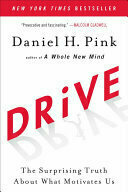
  • Finished reading: Drive by Daniel H. Pink πŸ“š

    The self-determination theory holds significant importance, yet many businesses overlook its application for employee motivation. Despite its relevance, the book tends to become somewhat repetitive in its exploration.

    β†’ 7:57 AM, Feb 8
  • πŸ“Έ Misty

    β†’ 11:45 AM, Feb 5
  • The reason I stayed in bed for an hour longer today:

    No list, app nor productivity app will work if you are simply tired.
    Nicholas Bate https://blog.strategicedge.co.uk/2024/02/the-most-powerful-productivity-tips-85.html
    β†’ 8:54 AM, Feb 1
  • Looking forward to your vacation and making travel plans often makes you happier than the trip itself

    People are often happier when planning a vacation than during the vacation itself. Research shows that people who are going on a trip are happier in the time before their vacation than people without travel plans. This is because they are looking forward to a good time. By planning a vacation, people can dream about new experiences. This makes them happy.

    When people prepare for a vacation, they are busy choosing places to go and what they want to do there. They imagine how fun it will be. This preparation time makes people excited and happy. They look forward to getting away from their regular life and seeing new places.

    After the vacation, people are often not happier than before, except if the vacation was very relaxing. There is usually no difference in how happy people are after their vacation compared to people who did not go away. This is because people quickly get used to their normal life. It seems that planning a vacation makes people the happiest, even if the vacation itself is sometimes less enjoyable than expected.

    Related:

    • Take the time to think about, dream of, and look forward to future activities
    • Do things that makes you happy everyday, since happy workers are 12% more productive
    β†’ 5:13 PM, Jan 24
  • Well-rested people are more positive

    People who sleep well are often more positive, and this is due to how sleep affects their brains. Research shows that sleep deprivation mainly affects the part of the brain that processes positive and neutral memories, the hippocampus. The part that remembers negative things, the amygdala, is less affected. As a result, people who do not get enough sleep have more difficulty retrieving positive memories, but negative memories remain well ingrained. This means that lack of sleep has a negative impact on their mood and how they see the world around them.

    Walker conducted an experiment that clearly demonstrates this effect. In this study, sleep-deprived students had to remember a list of words. The results showed that these students could remember 81% of words with a negative meaning, such as “cancer,” but only 31% of words with a positive or neutral meaning, such as “sunshine” or “basket.” This difference in memory performance shows how sleep deprivation causes people to focus more on negative information, which can lead to a more pessimistic worldview and a less positive mood.

    Many people notice that they feel happier and more positive after a good night’s sleep. This is because enough sleep helps the brain process positive and neutral memories well. This allows you to look at the world more optimistically and balanced. In short, getting enough sleep is very important for maintaining a good mood and seeing the world in a balanced way.

    Related:

    • Take the time to think about, dream of, and look forward to future activities
    • Good sleepers are more productive and earn more
    • In general, people perform better in the morning hours than later in the day
    • “Revenge bedtime procrastination” is the deliberate delay of bedtime to regain control
    β†’ 4:09 PM, Jan 24
  • I still haven’t found any use for the desktop widgets in macOS. The only widget I would probably use, a “Now Playing” widget, is precisely the one widget Apple decided not to make.

    β†’ 4:28 PM, Jan 19
  • Currently reading: Drive by Daniel H. Pink πŸ“š

    β†’ 7:12 PM, Jan 18
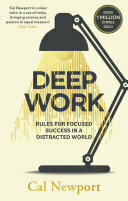
  • Finished reading: Deep Work by Cal Newport πŸ“š

    Already a classic work, explaining a concept which is very needed in current times. I feel, however, that Cal emphasizes too much how good his particular way of working is and doesn’t give many alternative ways of doing deep work.

    β†’ 10:26 AM, Jan 18
  • It looks we returned a week too early from the Netherlands. I would love to be able to skate on natural ice again. Look at those images: nos.nl/l/2504465

    β†’ 3:25 PM, Jan 12
  • Having fun preparing a trip for my wife’s 50th birthday. Her wish is to wake up in a place she’s never been to and she will not believe her eyes when she does.

    β†’ 6:43 PM, Jan 10
← Newer Posts Page 3 of 3
  • RSS
  • JSON Feed
  • Micro.blog