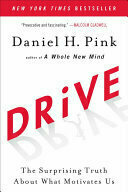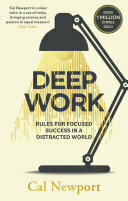
Nice! Day One has included journaling suggestions.
📸 Miró
What a great advice:
Try to be surprised by something every day. It could be something you see, hear, or read about. Stop to look at the unusual car parked at the curb, taste the new item on the cafeteria menu, actually listen to your colleague at the office. How is this different from other similar cars, dishes or conversations? What is its essence? Don’t assume that you already know what these things are all about, or that even if you knew them, they wouldn’t matter anyway. Experience this one thing for what it is, not what you think it is. Be open to what the world is telling you. Life is nothing more than a stream of experiences — the more widely and deeply you swim in it, the richer your life will be.
Instead of tackling every small task as soon as it arises, you can gather similar tasks and do them all at once. This is called “batching,” and it helps you spend less time starting and finishing work. For example, if you make all your phone calls at one time of the day, you stay in the same mindset and don’t have to constantly switch between different types of tasks. This way, you not only work faster but also feel less mentally burdened.
A good example of batching is how you handle emails. Instead of constantly checking your inbox and responding to every new email immediately, you can choose to check and respond to your emails at set times of the day. This way, your day isn’t constantly interrupted by new messages, and you can better focus on more important tasks. By applying batching, you create a calmer and more focused work rhythm, allowing you to ultimately get more done and experience less stress.
This is related to your internal biological clock and how your body naturally works. Chronobiology - the science that looks at your biological rhythms - shows that you go through different cycles throughout the day that affect how alert you are and how well you perform. These natural rhythms (also called ultradian rhythms) ensure that your energy and focus do not remain at the same level all day.
Research confirms that your productivity is indeed higher in the morning than in the afternoon, and you can use this natural variation to work more efficiently. This pattern is related to various biological processes in your body, such as your hormone production and body temperature, which are optimal for mental performance in the morning. Although there are individual differences in chronotype - some people are naturally more morning or evening people - for most people, their cognitive abilities are at their peak in the first half of the day.
By consciously using this natural productivity cycle, you can better organize your workday. It is therefore wise to schedule the heaviest and most important tasks in the morning hours when your concentration and mental energy are at their best. This insight from chronobiology provides you with a scientific basis to improve your daily planning and work routines.
When you have less energy, it can change your way of thinking and promote creativity. You are less likely to stick to usual thought patterns and more open to unexpected ideas. Research shows that people are often better at solving problems when they are less alert, such as at times of the day when they don’t feel at their best.
Being creative means being able to make connections between things that seem unrelated at first glance. This is easier when you are less focused, as your mind can wander more freely and form new ideas. Sometimes it helps to let a problem rest for a while, so the solution emerges on its own. When you have less energy, you are less inclined to focus on direct, logical solutions and can instead make room for innovative ideas.
It may seem strange to do creative tasks when you don’t feel energetic, but that’s when surprising and original ideas can arise. Creativity doesn’t always come from hard work and focus; it can flourish when you are relaxed and less alert. By consciously choosing low-energy moments for creative tasks, you can take advantage of your mind’s natural tendency to make new and unusual connections.
Today I joined Exist to help organize and interpret my vast array of personal health data. I’ve integrated various tools into the platform, including Apple Health, Oura, my Withings scale, and even my calendar and weather data, in order to gain a comprehensive view of my health and habits.
Even though the app is still in the early stages of data collection, it’s already begun to show some interesting correlations. While some are quite predictable and not particularly useful, such as burning more energy when I exercise longer, or waking up later on weekends, others have been surprising. For instance, it appears there’s a higher likelihood of rain in Lleida on Wednesdays - an unexpected yet intriguing find.
What’s truly piqued my interest, however, are the correlations related to my body metrics. I’ve noticed that my weight tends to increase when the days are longer, a trend that seems to be quite common. Additionally, I’ve found that my lean mass tends to be higher when I have fewer events on my calendar.
So far, my experience with Exist has been quite intriguing. It’s fascinating to see the connections between various aspects of my life and health, and I’m excited to uncover more insights as I continue to use the app.
Currently reading: The Checklist Manifesto by Atul Gawande 📚
📸 Ficus Pumila on a Tevaplanter
After this summer’s experiments with my Tevaplanter, I decided this weekend whether I could grow something more permanent.
So I got myself a small ficus and spend half an hour removing all the soil from the roots, which was more work than expected.
I am quite happy with the result.
The only doubt I have is where to place it. I would like to have it on my office table, but that is probably too shady, so for the moment it recovers from today’s stress in front of mef the living room window.