
Email is not your manager.
YOU decide what you do according to YOUR objectives. E-mail is at best an assistant, a reminder, a support mechanism.
It is not your manager.
Email is not your manager.
YOU decide what you do according to YOUR objectives. E-mail is at best an assistant, a reminder, a support mechanism.
It is not your manager.
Murphy’s Law struck again: I was trying to get everything ready for this morning’s workshop, so I restarted my iMac. But just 15 minutes before the workshop was supposed to begin, my iMac wouldn’t start up. 😖
I am extremely busy today, so what did I do this morning?
Exactly, add recommendations (AKA blogroll) to my profile.
The use of SMART goals (Specific, Measurable, Achievable, Realistic, Time-bound) is a popular way to set goals. However, there are reasons not to use this method. Firstly, the SMART principle is not based on strong scientific theories and does not align with research findings. This means that the effectiveness of SMART goals has not been well-proven by scientific research, which can lead to poorer results and confusion when using them.
The SMART framework does not take into account the type of goal being set and is often not applied consistently. This lack of consistency and clarity can result in goals that do not fit well with the personal needs and situations of the people trying to achieve them. Moreover, the SMART acronym does not provide enough detailed guidance, which can lead to a superficial approach to goal setting and a higher risk of negative effects, such as demotivation or stress if the goals are not met.
Finally, SMART goals are often not used as intended and sometimes contain redundant criteria. This can lead to inefficient and confusing objectives. Instead of sticking to a rigid and possibly flawed system, it is more useful to use more flexible and tailored methods for setting goals. These methods better fit the specific situation and needs of the people.
Various studies on sleep habits and work performance show that good sleep has a significant impact on how well people perform their jobs. A study by Rosekind et al. (2009) examined the sleep habits of more than 4,000 knowledge workers. They found that people who sleep well not only earn more but also perform much better than their colleagues who sleep poorly or too little, or suffer from insomnia. These good sleepers are better at time management, physical and mental performance, interpersonal skills, and their work output. These improvements are much more convincing than, for example, the benefits of shorter meetings.
Data shows that people with insomnia and insufficient sleep perform much worse at work and work less safely. They also use sleep medication more often, while others more frequently opt for non-medication treatments. Due to fatigue, employees lose an average of $1967 per year in productivity. This shows how costly sleep deprivation can be for both employees and employers.
The importance of good sleep cannot be emphasized enough. Sleeping in is seen as a major gain because it not only improves your performance and well-being but also has economic benefits. Employees who get enough and good sleep can do their work better and faster. This leads to higher productivity and ultimately more income.
I truly appreciate the conversation awareness feature of the Apple AirPods. However, it would be even better if this feature could distinguish between my speaking voice and when I’m singing, adjusting the volume accordingly.

Currently reading: Solve For Happy by Mo Gawdat 📚
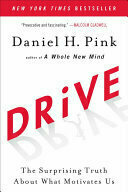
Finished reading: Drive by Daniel H. Pink 📚
The self-determination theory holds significant importance, yet many businesses overlook its application for employee motivation. Despite its relevance, the book tends to become somewhat repetitive in its exploration.
📸 Misty

The reason I stayed in bed for an hour longer today:
No list, app nor productivity app will work if you are simply tired.