
Habit
A habit is an unconscious behaviour that is automatically triggered by an impulse.
📸 Aïguestortes
We have this fantastic national park at just a few hours driving from home, but it has been years since we went there for a good hike.
This weekend was a blast and I am sure this time we will return within months, not years.
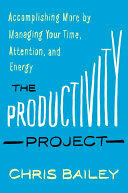
Currently reading: The Productivity Project by Chris Bailey 📚
We’ll review this book next month on our podcast.
Currently reading: Understanding Variation by Donald J. Wheeler 📚
I learned about this book on the Cortex podcast and so far I like it. Easy to understand and well written.
Finished reading: Antifragile by Nassim Nicholas Taleb 📚
Let’s walk!
A goal needs a walk, some writing and considerable reflection to make it real.
This approach is related to the concept of self-efficacy, which means believing that you can perform certain tasks. If you first succeed with an easy task, you gain more confidence and prepare yourself for bigger challenges. By gradually building your skills and confidence step by step, you improve your self-confidence.
The idea is that each small victory contributes to your self-confidence. When you do something that is within or just outside your comfort zone, you slowly expand your comfort zone. This means you grow by challenging yourself with things that are just a bit more difficult than what you are used to. In this way, you improve your skills and self-confidence step by step. This is similar to the principle “Fake it till you make it,” where by practicing, you eventually become truly capable of doing something.
In recent years, our phone usage has increased significantly. Do you know what research shows? We pick up our phones on average more than 350 times a day! That means you reach for your device approximately every two minutes and 43 seconds. These figures are almost four times higher than in 2019, when we checked our phones on average only 96 times a day. This increase is partly due to changes in our daily lives and how we work since COVID-19, with much more online communication.
The increase in phone usage has various causes, including phone addiction. Social media and other apps are designed to capture your attention, making it easy to get distracted. The constant need to stay connected and not miss out makes it difficult to put your phone down. Additionally, notifications constantly interrupt your activities, explaining why you reach for your phone so often.
This trend also affects your productivity and mental health. Constantly switching between tasks and checking your phone makes you work less efficiently and experience more stress. Although technology has improved our lives in many ways, it’s important to be mindful of your phone usage and also take time to digitally unwind. By paying better attention to how often you use your phone, you can find a better balance between being online and offline.
I am so proud to see our podcast at number 30 in Apple’s podcast ranking for Spain:
I have updated the list of all the tools I use.
What are your favourite tools?
Such a great list!
- A ribeye fresh off the grill
- Warm sun on your skin
- An old favorite song on the radio
That’s a lot of quantified self data
Observa cuál es el primer podcast recomendado en Apple Podcasts. 🥹
I wish I could reclassify apps in the iOS App Library.
Logistics is not logical 📦
Currently reading: Antifragile by Nassim Nicholas Taleb 📚
“Redundancy is ambiguous because it seems like a waste if nothing unusual happens. Except that something unusual happens—usually.”
— Nassim Nicholas Taleb in Antifragile
Be prepared…
Finished reading: Designing the Mind by Ryan Bush 📚
Interesting and well written book about building proactive life on a cognitive, emotional and behavioral level. I liked how Ryan was able to draw simple schematics for the algorithms in our mind.
A 5-minute unstructured break can be sufficient to restore your concentration. Research from the University of Sydney has shown that a short interruption of just five minutes, without specific activities or structure, is enough to bring your attention back to optimal levels. This means you don’t necessarily have to take a walk or watch a relaxing video; simply doing nothing for a short period can be effective. This finding supports the theory that a short, unstructured break is a powerful way to combat mental fatigue and increase productivity.
The attention restoration theory suggests that our brains need periodic rest to function optimally. Unstructured breaks, where you step away from your work without specific tasks or goals, can help restore your cognitive resources. These types of breaks offer a moment of mental rest and can therefore contribute to better focus and concentration when you return to work. It is a simple but effective strategy to improve the quality of your work without needing extensive or planned activities.
📸 Another week, another Tevaplanter update
The chia plants on my Tevaplanter are thriving, as shown in the progress from week 0 to week 1 to now:
Although I expected all the chia seeds to sprout, there are some areas where growth has not occurred. I suspect this may be due to the high temperatures on my outdoor patio, which make it difficult to maintain proper moisture levels for the plants.
To further explore and determine the best setup and purpose for the vessel, I plan to conduct an indoor experiment using chia seeds. This will help me make an informed decision on how to proceed.
Why does the EU still require a tax on hardware purchases to compensate media enterprises, despite the prevalence of streaming media?
Yesterday my iPad died with no way to resuscitate it 😱.
I have decided to hold off on purchasing a replacement for the time being and instead utilize my iPhone for media consumption. Although the smaller screen size proves to be a minor inconvenience, I am managing to adapt.
Nevertheless, it is inevitable that I will soon need to invest in a new iPad, as it is essential for running Keynote presentations during my workshops.
Be aware of scatter in your life.
Scatter is multiple monitors.Scatter is being busy without making progress.
Research shows that mindfulness meditation, even in short sessions, helps you distribute your attention better. This means that your brain handles the attention needed for difficult tasks more efficiently. In a study, people who meditated briefly performed better on attention tests, such as the Flanker Task and the Attention Network Test, without their reaction time worsening. This shows that meditation helps you concentrate better, even if you don’t have much experience with it yet. Although we don’t know exactly how long this improved concentration lasts, the results suggest that even a short meditation can enhance your concentration ability.
📸 Chia growing on my Tevaplanter
After five days, the chia buds are clearly visible and the roots start to grab hold of the Tevaplanter vessel’s surface